

The way NSW polices organised crime shifted this year, and most people outside the courts have not caught up with what has changed.
In June 2026, the NSW Parliament passed the Crimes Legislation Amendment (Organised and Gang-related Crime Reforms) Act 2026. This is a package the Minns Government says targets the “beating heart” of organised crime, including: firearms, vehicles, children, and money. It creates new criminal offences, lifts several maximum penalties, and hands police and prosecutors broader tools than they have had before.
If you is caught up in a matter touching any of these areas, the practical stakes just went up. Here is what the reforms actually do, and where the real risk sits.
What Is A ‘Kill Car’, And What Changed?
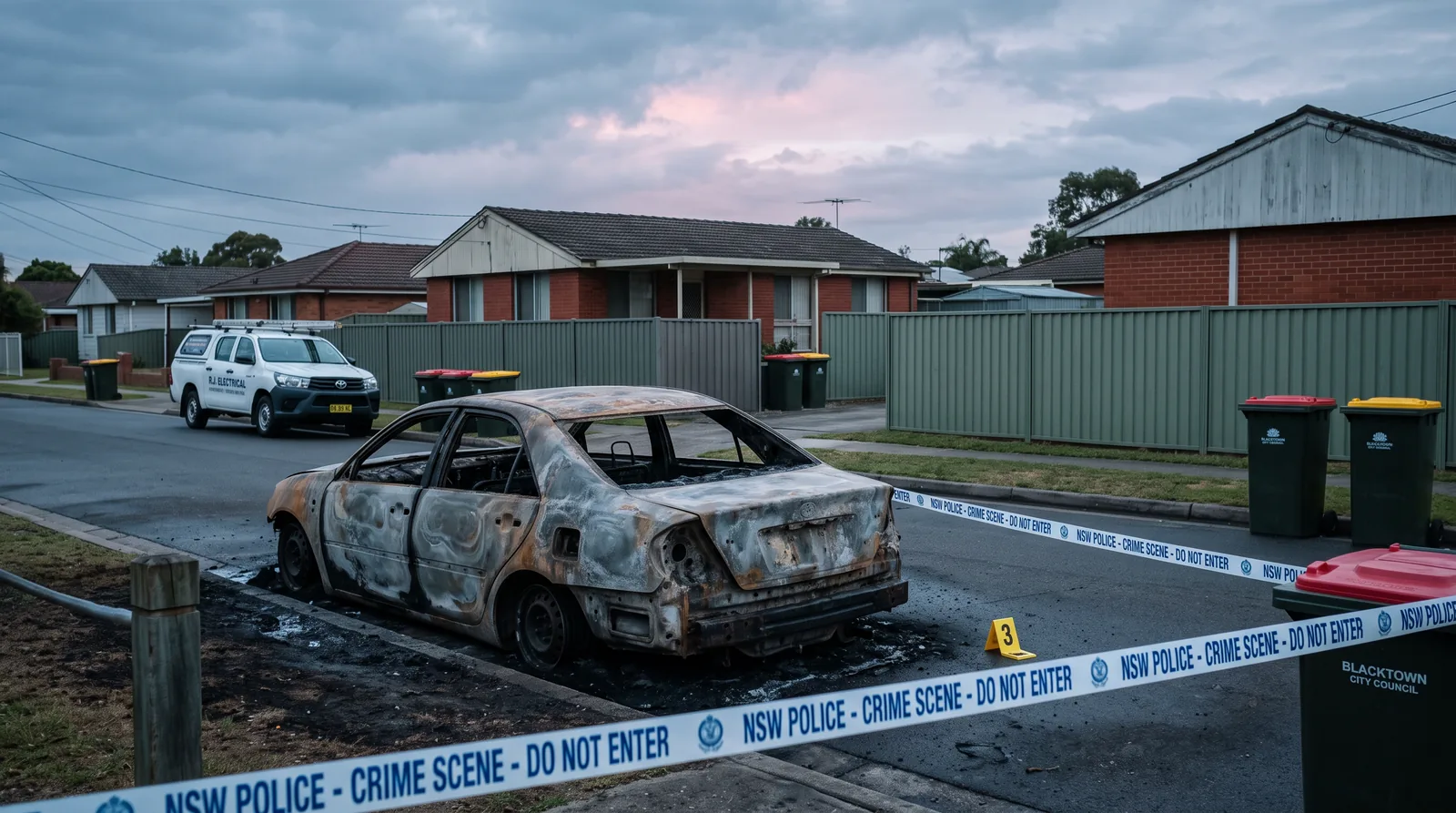
A “kill car” is a vehicle used to carry out a serious crime and then deliberately burnt to destroy forensic evidence.
The reform creates a new aggravated offence for intentionally or recklessly destroying or damaging a motor vehicle by means of fire or explosives where the vehicle was used in connection with particular serious criminal offences. It carries a maximum of 12 years’ imprisonment, two years higher than the base offence of destroying or damaging property by fire. The change is made by amending section 195 of the Crimes Act 1900 (NSW).
The point is to punish the cover-up on its own terms, not just the underlying crime.
In practice, that means a person can now face a serious standalone charge for the torching itself, even where proving the original offence is difficult.
Recruiting Children Into Crime: Higher Penalties, A New Aggravated Offence
This is the reform that deserves the most attention.
The maximum penalty for recruiting a child to carry out or assist in a criminal activity rises from 10 to 12 years, under section 351A(2) of the Crimes Act.
However, where the child recruited is under 16, the maximum climbs to 15 years. A new aggravated offence, also carrying up to 15 years, covers recruiting a child specifically for vehicle theft or other activity commonly tied to organised crime networks.
The policy logic is that networks deliberately use children because children have historically faced lighter consequences. But there is a harder truth underneath it: the child who is recruited is often exploited first and charged second.
Tougher recruitment penalties target the adults pulling the strings, but young people drawn into these networks can still end up facing charges themselves, which is where early, specialist advice matters most.
Anyone advising a young person in this position should understand both the recruitment offence and how the doctrine of doli incapax applies to children in NSW.
Public Shootings And Firebombings: What The Penalties Look Like Now
The reforms respond directly to the run of public shootings and business firebombings reported across Sydney. Several firearm and arson penalties went up, and one was widened to cover a common gap.
| Offence | Previous maximum | New maximum |
| Firing at a dwelling, building or vehicle (expanded to include vehicles), s 93GA(1) | 14 years | 16 years |
| Firing at a dwelling, building or vehicle during a public disorder or in the course of organised criminal activity, s 93GA(1A)/(1B) | 16 years | 18 years |
| Possessing, carrying or firing a pistol or prohibited firearm in or near public places or in a way likely to injure, or with disregard for the safety of any person (new aggravated offence) | No dedicated aggravated offence | 14 years |
| Arson targeting a business with reckless disregard for safety | Lower general arson penalty | 14 years |
| Destroying a vehicle by fire after a serious crime (“kill car”), s 195(1AAA) | 10 years | 12 years |
The headline shift is the firing-at-premises offence being extended to vehicles, closing a gap that mattered in real cases where shots were fired at occupied cars rather than buildings.
Penalties like these are maximums, not going rates. Actual sentences turn on the facts, the offender’s history, and the sentencing principles a court must apply, so the practical picture is almost always narrower than the headline number.
Following The Money: Asset Forfeiture And Bail
The reforms also go after the finances that make organised crime worth the risk.
Authorities now have five years, instead of one, to seek forfeiture of assets held by a person subject to a Drug Trafficker Declaration, and the scheme is drafted to reach wealth concealed through trusts. Separately, the changes strengthen the ability of courts to weigh a person’s alleged organised-crime links when making a bail decision.
The bail change is the one most likely to affect an ordinary defendant early, because it can shape whether a person is held on remand before any charge is tested.
Will Tougher Penalties Actually Disrupt Organised Crime?
Higher maximums make for strong announcements. Whether they disrupt networks is a separate question, and an honest one worth asking.
Deterrence assumes the person weighing the crime is thinking about the maximum penalty. For a principal running a network, that calculation may shift. For a teenager recruited with a promise of cash and status, it rarely does, which is why the recruitment provisions risk widening the net over young people the reforms are meant to protect.
None of that makes the reforms wrong. It means the way they are applied, especially to children and to people on the edges of a network, will decide whether they deliver safety or just longer sentences.
What This Means For You
If you, or someone close to you, is charged under any of these expanded offences, three things are now true.
- The exposure is higher: several of these maximums moved up, and one offence was widened to catch conduct it previously did not.
- Bail is harder to predict where organised-crime links are alleged, so the first 48 hours matter more than ever.
- A young person recruited into a network can be both exploited and charged, and needs advice that understands both sides of that.
Early advice is not about assuming the worst. It is about understanding exactly what has been alleged and what the real range of outcomes is, before decisions get made for you.
For the broader background to how these offences fit together, see our overview of NSW organised crime laws.
How O’Brien Criminal & Civil Solicitors Can Help
These are serious, fast-moving charges, and they are exactly the kind of matter our criminal defence team handles.
Whether the charge involves a firearms or weapons offence, a drug supply or trafficking allegation, or a young person drawn into a network, we assess what has actually been alleged and map the real options, including bail, early representations, and defence.
If you are facing a charge, our Accredited Specialist-led defence team can help.
Request initial advice (no-obligation) via the form below or call us on (02) 9261 4281.

Peter O'Brien is the Principal Solicitor of O'Brien Criminal & Civil Solicitors and Australia's leading expert in intentional torts litigation, with over 25 years of experience securing landmark victories in malicious prosecution and unlawful imprisonment cases. Author of Intentional Tort Litigation in Australia and recipient of the Law Council of Australia President's Medal, Peter has achieved record-breaking compensation for clients and is widely recognised for his unwavering commitment to access to justice.