
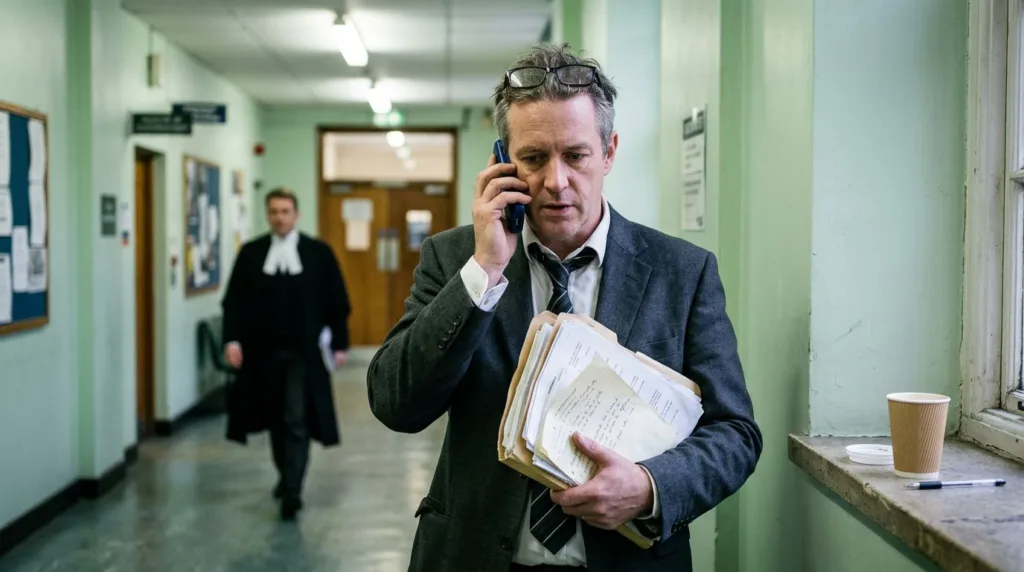
If you are an accused person whose bail has been refused by the Local Court, you still have options. Bail in the Supreme Court offers a genuine avenue for complex bail matters, and a Supreme Court judge has granted bail in circumstances where lower courts have refused.
This guide explains how Supreme Court bail applications work, what grounds you need, and what evidence gives you the best chance of success. If you need to obtain legal advice urgently, contact an experienced criminal lawyer as early as possible, every day in custody matters.
Understanding Bail Refusal in NSW
A bail decision can be made by a range of bail authorities in New South Wales, from a police officer at the police station immediately after arrest, to local court magistrates, and ultimately the Supreme Court. If police refuse bail at the station, the matter proceeds to the Local Court for a local court bail application.
Under the Bail Act 2013 (NSW), courts refuse bail for two primary reasons: you are facing a show-cause offence, or the court believes you pose an unacceptable risk. Understanding the legislation is critical before any criminal proceedings are commenced.
Show Cause Offences
For show cause offences, typically serious criminal offences classified as serious indictable offences, the onus is reversed. Under section 16B of the Bail Act 2013 (NSW), you must demonstrate special or exceptional circumstances, compelling reasons why your detention is not justified, rather than the prosecution proving why you should be detained.
Show cause offences include:
- Crimes of violence
- Sexual offences
- Offences punishable by life imprisonment
- Prior serious personal violence convictions
Unacceptable Risk Test
For other offences, a court may refuse bail if satisfied there is an unacceptable risk that you will:
- Fail to appear at court
- Commit a serious offence
- Endanger the safety of victims or the community
- Interfere with witnesses or evidence
The court must consider all alternatives before refusing bail.
Local Court vs Supreme Court Bail
If local court bail has been refused, the Supreme Court is your next opportunity. For some matters, a criminal appeal may also lie to the Court of Criminal Appeal or District Court, depending on the stage of court proceedings. Key differences between local court bail applications and Supreme Court bail:
| Factor | Local Court | Supreme Court |
| Access | First bail hearing | After Local Court refusal only |
| Timeframe | Usually within 2 days | 6-8 weeks wait; 2 weeks minimum processing |
| Evidence Format | Oral testimony; simple forms | Formal affidavits and written submissions |
| Appearance | Usually in person or via AVL | Usually via AVL from prison |
| Applications | Unlimited applications possible | Generally one application; repeat only if circumstances change |
Grounds for Applying to the Supreme Court
You may apply to the Supreme Court for bail if:
- Bail was refused by the Local Court without legal representation, and you are now legally represented
- There is new material information not presented at the previous hearing
- Your circumstances have materially changed since the bail refusal
- The charges or offence category have changed
The Supreme Court application is more formal than the Local Court process. You must present comprehensive written submissions, detailed affidavits, and supporting evidence. Our criminal law team can guide you through each step.
How to Apply for Supreme Court Bail
Prepare Your Application
Gather all relevant documentation: proposed bail conditions, character references, evidence of employment and accommodation, surety details, and any medical or psychiatric reports. Your solicitor will draft written submissions addressing the concerns raised at the Local Court hearing.
Lodge with the Supreme Court Registry
File your formal application with supporting affidavits at the Supreme Court Registry. The court will assign a matter number and provide a hearing date, typically 14 days from lodgement.
Attend the Hearing
Most hearings occur via audiovisual link (AVL) from prison. Your solicitor presents oral submissions and the prosecution responds. You may also give evidence if required.
Await the Decision
The judge delivers a decision either immediately or within days. If bail is granted, release is arranged directly. If refused, a further application requires new circumstances or evidence.
Evidence That Strengthens Your Application
Accommodation
Provide proof of stable residence: recent utility bills, a tenancy agreement, or a letter from the property owner. The court needs to confirm you have a fixed address.
Sureties
A surety is a person who agrees to supervise your bail and forfeit money if you breach conditions. Strong sureties are employed, have no criminal record, and provide a written offer with a proposed surety amount. Multiple sureties strengthen your application.
Employment
Submit an employment letter confirming your position, salary, and likelihood of continued employment. Self-employment declarations supported by invoices or tax returns are also accepted.
Character References
Obtain references from people of good standing who know you well: employers, teachers, community leaders, or family friends. References should address your character, reliability, and ties to the community.
Medical and Psychological Reports
If mental health, substance abuse, or medical conditions are relevant, expert reports demonstrating your commitment to treatment can reduce perceived risk and significantly strengthen your application.
Timeframes and Costs
The Supreme Court does not charge filing fees for bail applications. Legal representation costs vary depending on case complexity, with some solicitors charging hourly rates and others offering fixed fees. Ask your solicitor for a formal cost estimate before proceeding.
The complete application and hearing process typically takes 6-8 weeks from lodgement to decision.
What Happens If the Supreme Court Refuses Bail
A refusal is not necessarily the end. You may make a further application if:
- Significant new evidence becomes available
- Your circumstances materially change, for example, employment is obtained or stable housing secured
- The charges are reduced or withdrawn
- A court certifies the conditions for a repeat application under section 74 of the Bail Act 2013 (NSW) are satisfied
Work closely with your legal team throughout custody. Completing courses, securing an employment offer, or establishing stable housing can all strengthen a future application.
Frequently Asked Questions
How long after bail is refused can I apply to the Supreme Court?
Immediately. There is no set waiting period, you can apply as soon as bail is refused by the Local Court. The court will hear your application if you can demonstrate new circumstances, new legal representation, or material new evidence. Begin preparations with your solicitor without delay.
How much does a Supreme Court bail application cost?
No filing fee. Costs arise from legal representation, which varies by case complexity and the work required to prepare your application. Some solicitors charge hourly rates; others offer fixed fees. Contact your solicitor for a formal cost estimate before proceeding.
What is a show cause offence?
A show cause offence reverses the burden of proof. Instead of the prosecution proving you should be detained, you must prove why you should be released.
Show cause offences include:
- Offences punishable by life imprisonment
- Serious sexual offences
- Offences involving violence
- Serious domestic violence offences
- Certain offences committed while on bail or parole
Can I apply for bail more than once?
Generally once, but a repeat application is possible under section 74 of the Bail Act 2013 (NSW) if:
- You did not have legal representation at the first hearing and now do
- There is new material evidence
- Your circumstances have materially changed
The court must be satisfied one of these conditions applies before considering a repeat application.
Check out our other criminal law case studies.
Don’t Let a Bail Refusal Define Your Future
A Local Court refusal is not the end of your options. Experienced legal representation significantly improves your prospects in the Supreme Court, particularly when new evidence or changed circumstances support your case.
Request your initial consultation by filling in the form below, or call (02) 9261 4281.