
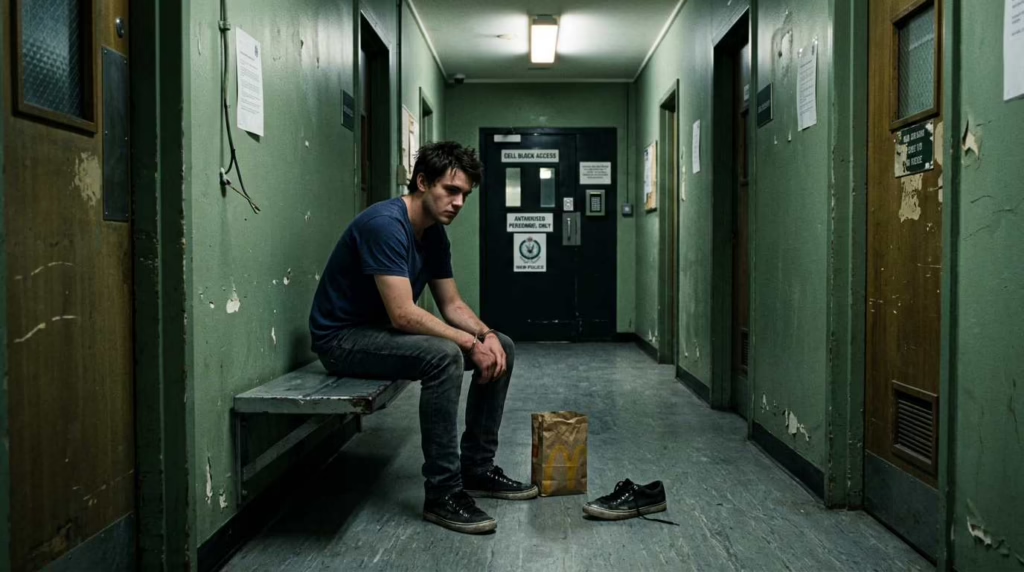
If Police Acted Unlawfully Against You, You Have Options
Police misconduct in NSW is a lot more common than many people realise, and its consequences can be serious and long-lasting. Being arrested without proper grounds, held beyond the legal time limit, or subjected to force that went further than the law permits, these are not just distressing experiences. They may give rise to a civil claim against the State of NSW.
This fact sheet explains what false imprisonment, assault, and battery mean under civil law, what protections NSW legislation gives you, how to build a claim, and what compensation you may be entitled to.
Key Takeaways
- NSW Police must comply with the Law Enforcement (Powers and Responsibilities) Act 2002 (NSW) (LEPRA) when exercising their powers. When they fail to do so, their conduct may be unlawful.
- Three civil wrongs can arise from unlawful police conduct: false imprisonment, assault, and battery. Each can be claimed independently or together.
- Civil claims are filed against the State of NSW, not individual officers, and can result in substantial financial compensation.
- Courts can also award aggravated damages where conduct was malicious or involved racial abuse, and exemplary damages to punish serious abuses of police power.
- You generally have three years from the date of the incident to commence proceedings under the Limitation Act 1969 (NSW).
- CCTV footage is often overwritten within 30 days, acting quickly matters.
- O’Brien Criminal & Civil Solicitors is a nationally recognised firm with deep expertise in police misconduct and civil compensation law.
Signs You May Have a Claim Against Police
A civil claim against NSW Police may be available if:
- You were arrested without a warrant or without reasonable grounds
- Police did not tell you why you were being arrested
- You were held beyond the legally permitted investigation period
- Force was used against you after you had stopped resisting or were already restrained
- You were pepper-sprayed, tasered, or handcuffed in a way that caused injury without lawful justification
- You were denied access to a lawyer, water, or medical attention while in custody
- You were subjected to racially discriminatory conduct during arrest or detention
- You were strip-searched without the grounds required under LEPRA
What Is False Imprisonment, Assault and Battery?
Three separate civil wrongs can arise from unlawful police conduct. Each can be claimed on its own or together, depending on what happened.
False imprisonment is the unlawful restriction of a person’s freedom of movement. If police arrested you without proper legal authority, failed to inform you of the reason for your arrest, or held you beyond the legally permitted time, this can form the basis of a false imprisonment claim.
Assault (civil law) does not require physical contact. It includes any deliberate act that causes you to reasonably fear immediate unlawful force, threats, aggressive gestures, or the drawing of a weapon without lawful justification.
Battery occurs when police physically harm you without lawful justification. Common examples include being pushed, kicked, struck, pepper-sprayed without cause, tasered without grounds, or handcuffed so tightly that injury results.
Aggravated damages are additional compensation that courts may award where police conduct was particularly high-handed, malicious, or involved racial abuse or other oppressive behaviour.
Exemplary damages are awarded by courts to punish serious abuses of police power and deter future misconduct. They are separate from compensation for your personal loss.
Your Rights Under the Law
NSW Police officers must comply with LEPRA when exercising their powers. The Act sets clear requirements for arrest and use of force.
On arrest, police must inform you that you are under arrest (section 202), tell you the reason for your arrest as soon as reasonably practicable (section 202(1)(c)), use only the minimum force reasonably necessary in the circumstances (section 230), and bring you before a magistrate or authorised officer as soon as reasonably practicable. They must not detain you beyond the maximum investigation period without charge, generally 6 hours, extendable by up to a further 6 hours with a detention warrant under Part 9 of LEPRA (total investigation period usually capped at 12 hours, excluding “time out” periods).
Force used against a person who is already restrained, complying, or on the ground will only be lawful if it is reasonably necessary in the circumstances; anything beyond that may amount to assault or battery. If you were struck, sprayed, or subjected to force after you had stopped resisting or were already in custody, that conduct may constitute unlawful battery.
Common Examples of Unlawful Police Conduct
The following scenarios can each form the basis of a civil claim. This list is not exhaustive.
Unlawful arrest: Arrested without a warrant or without reasonable grounds; not informed why you were being arrested.
Excessive force: Punched, kicked, or tackled when you posed no threat; force continued after you were already restrained.
Pepper spray misuse: Sprayed at close range without justification; sprayed while already restrained; sprayed in an enclosed space.
Taser misuse: Deployed without lawful grounds; used multiple times when not necessary; used against a person already under control.
Handcuff injuries: Cuffs applied so tightly that they caused nerve damage, lacerations, or restricted blood circulation.
Unlawful detention: Held beyond the legal time limit; denied access to a lawyer; denied water or medical attention while in custody.
Racial abuse: Subjected to racially discriminatory conduct during arrest or in custody. This can attract aggravated damages on top of other compensation.
Unlawful strip search: Searched without the requisite grounds or authority required under Part 4 of LEPRA. See also our NSW Strip Search fact sheet.
Time Limits: Act Quickly
Time limits apply strictly to civil claims against NSW Police. You generally have three years from when your cause of action is discoverable (often close to the date of the incident) to commence proceedings, subject to a 12-year long-stop period for personal injury claims under the Limitation Act 1969 (NSW).
A few important points:
- If you were a minor at the time, the limitation period may not begin until you turn 18.
- Courts have limited discretion to extend time limits in exceptional circumstances, but an extension is never guaranteed.
- CCTV footage, often critical evidence, is routinely overwritten within 30 days of an incident.
- The sooner you seek legal advice, the better your chances of preserving the evidence you need.
Building Your Case: Evidence That Matters
Strong evidence is the foundation of any successful civil claim. The following types of evidence are commonly used in NSW police misconduct cases.
CCTV footage: Request this as quickly as possible. Footage from police stations, nearby businesses, and council cameras is frequently overwritten within 30 days. Your solicitor can issue a preservation notice to prevent deletion.
Body-worn camera footage: NSW Police officers are required to wear body-worn cameras. Footage can be requested through your solicitor via formal discovery processes.
Medical records: Have injuries assessed and documented at the time. Obtain written reports from all treating practitioners, including any follow-up treatment.
Photographs: Take photos of bruising, lacerations, and other injuries as soon as possible, and again over the following days as bruising develops.
Witness statements: Collect the names and contact details of anyone who saw the incident.
Police records: Arrest records, charge sheets, bail conditions, and court outcomes are all relevant to your civil case.
Your own written account: Write down exactly what happened while the details are still fresh — the time, location, officer descriptions, and the precise sequence of events.
LECC complaint records: Any complaint lodged with the Law Enforcement Conduct Commission (LECC) may produce relevant documents and disclosures that support your civil claim.
Making a Complaint vs Making a Civil Claim
These are two separate processes, and you can pursue both at the same time.
A complaint to the LECC investigates officer conduct and may result in disciplinary action. It does not result in financial compensation for you. You can lodge a complaint directly at lecc.nsw.gov.au. The LECC is the independent oversight body for NSW Police and can investigate serious misconduct, including excessive force, unlawful arrests, and racial abuse. Evidence gathered through the LECC process can sometimes support your civil case.
A civil claim is a legal action filed in the NSW District Court or Supreme Court against the State of NSW. It seeks financial compensation for the harm you suffered and requires a solicitor to run the proceedings on your behalf.
What Compensation Can You Seek?
In a successful civil claim, a court may award the following:
General damages: compensation for pain, suffering, and loss of enjoyment of life resulting from the incident.
Special damages: out-of-pocket losses, including medical expenses, lost income, and future care costs.
Aggravated damages: additional compensation where the conduct was malicious, oppressive, or involved racial abuse or deliberate humiliation.
Exemplary damages: awarded to punish particularly serious abuses of police power and deter future misconduct.
Nominal damages: a small award recognising that your legal rights were violated, even where no significant quantifiable harm resulted.
The amount of compensation depends on the severity of the conduct, the nature and extent of your injuries, and any aggravating circumstances. NSW courts have awarded significant sums in cases involving racial abuse, deliberate brutality, and prolonged unlawful detention.
Frequently Asked Questions
Do I need to have been charged with an offence to bring a civil claim?
No. The question in a civil claim is whether the police acted unlawfully, not whether you were guilty of anything. Many people who bring successful civil claims against police were never charged or had charges withdrawn.
Can I make a civil claim even if my criminal case is still ongoing?
Generally, yes, though the timing of civil proceedings in relation to any criminal matter requires careful consideration. Your solicitor can advise on the appropriate approach given your circumstances.
What if there were no witnesses?
Witness evidence is helpful but not essential. Body-worn camera footage, CCTV, medical records, and your own detailed contemporaneous account can all be compelling evidence in the absence of independent witnesses.
What if police made a complaint about me, or I was convicted of an offence arising from the same incident?
A criminal conviction does not necessarily prevent a civil claim. The conduct of police is assessed independently. However, the facts of your conviction may be relevant to how the civil case is run, and early legal advice is essential.
Will I have to go to court?
Many civil claims against NSW Police are resolved through negotiation and settlement before trial. That said, you should be prepared for the possibility of proceedings, and having a solicitor experienced in police misconduct matters is important from the outset.
What if I was subjected to racial abuse during the incident?
Racial abuse during arrest or detention is a serious aggravating factor that courts take into account. It can significantly increase the damages awarded, including through aggravated and exemplary damages. It is important to document and preserve any evidence of racially discriminatory conduct.
What to Do Next
If you believe police acted unlawfully against you, take these steps as soon as possible:
- Seek medical attention immediately, even if injuries appear minor. Medical records are critical evidence.
- Photograph all injuries, including bruising that may develop over the following days.
- Write down exactly what happened while the details are fresh — times, locations, officer descriptions, and the sequence of events.
- Preserve all evidence — do not delete messages, photos, or any records related to the incident.
- Request CCTV footage through your solicitor before it is overwritten.
- Consider lodging a complaint with the LECC if you want to make a formal complaint about officer conduct.
- Speak to a specialist civil solicitor before the limitation period expires.
How O’Brien Criminal & Civil Solicitors Can Help
O’Brien Criminal & Civil Solicitors is a nationally recognised firm with deep expertise in police misconduct and civil compensation law. Our civil law team regularly acts for clients across New South Wales in cases involving false imprisonment, excessive force and brutality, racial discrimination and abuse, pepper spray misuse and taser incidents, handcuff injuries, unlawful searches, and psychological injury arising from police misconduct.
We understand that taking legal action against police can feel overwhelming. Our role is to manage the legal complexity on your behalf, gathering evidence, dealing with the State, and representing you through every stage of the process.
Call O’Brien Criminal & Civil Solicitors on 02 9261 4281 or enquire online for a confidential consultation.
This fact sheet provides general legal information only and does not constitute legal advice. Every situation is different. If you believe you have been subjected to unlawful police conduct, seek independent legal advice about your specific circumstances promptly.