
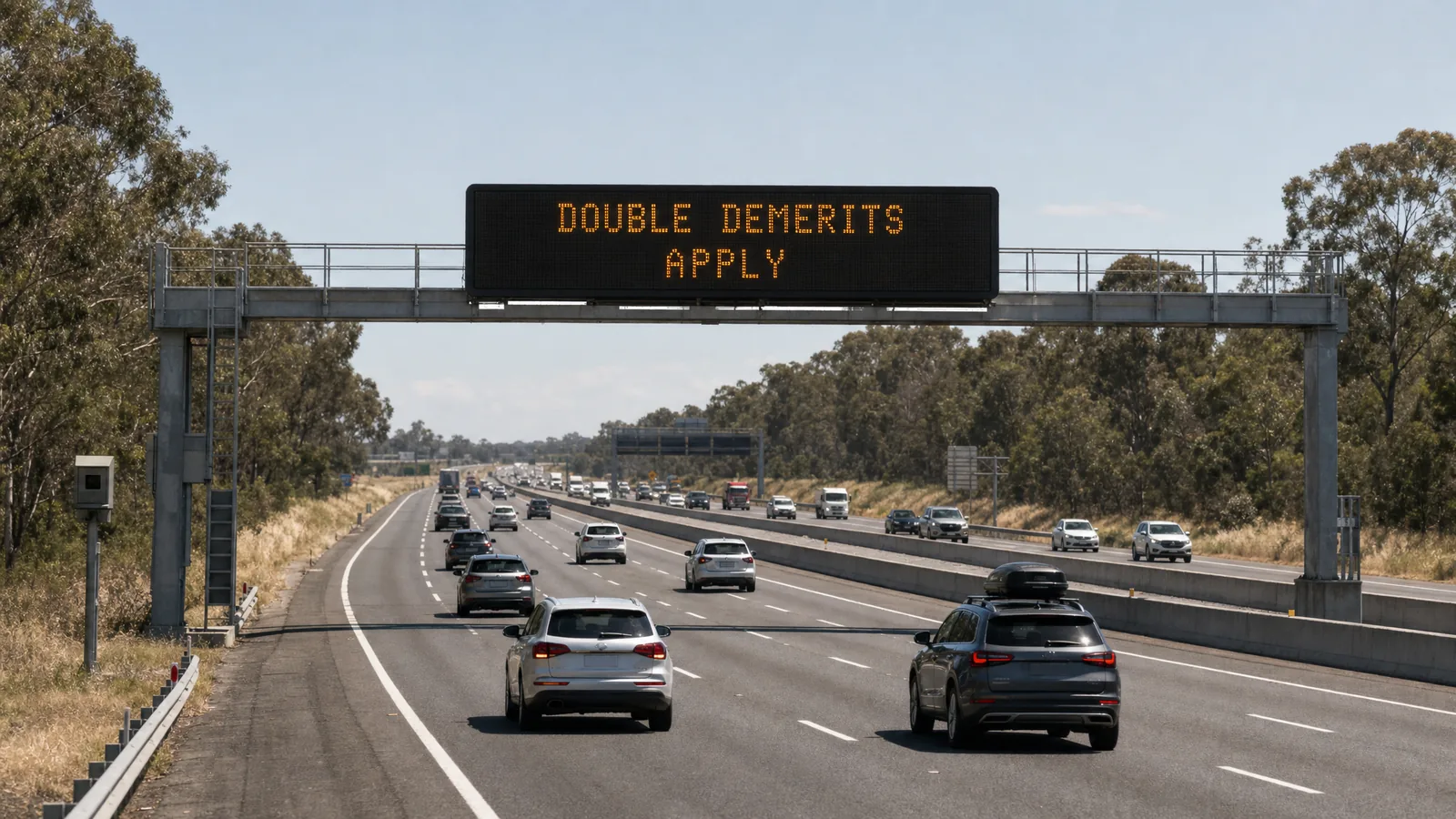
Double demerit points apply in NSW from 24 December 2026 to 3 January 2027. During this period, some offences carry twice the usual demerit points, but the fine does not double.
Double demerits can bring some drivers closer to losing their licence.
When do double demerits apply this Christmas and New Year?
NSW double demerits run from 24 December 2026 to 3 January 2027, covering Christmas Day, Boxing Day and New Year’s Day. Transport for NSW publishes the dates on its demerit points page, and they are worth re-checking before you travel, because the calendar changes each year.
Which offences attract double points?
Four groups of offences are doubled during a NSW holiday period. The NSW Government lists demerit points as:
- speeding offences
- illegal use of a mobile phone
- seatbelt offences, including a passenger who is not wearing a seatbelt or an approved restraint
- riding a motorcycle without a helmet
Every other offence attracts its normal points. Running a red light, for example, is not on the list.
Remember, you face double the points, not double the fine. That distinction matters because a fine can be paid and forgotten, whereas points stay on your record.
What about drink-driving?
Drink-driving is not part of the double demerit scheme. It carries separate penalties, which can include licence disqualification, and applies all year round.
If you are charged, the rules and your options are different from a demerit points problem. Our drink-driving page explains how those matters work.
How close are you to losing your licence?
Your licence can be suspended if you reach the demerit point limit for your licence type. Double demerits can get you there faster, especially if you hold a P1, P2 or learner licence.
| Licence type | Demerit point limit |
|---|---|
| Unrestricted licence | 13 |
| Professional driver | 14 |
| Provisional P2 | 7 |
| Provisional P1 | 4 |
| Learner | 4 |
| Unrestricted licence during a good behaviour period | 2 |
With a limit of only 4, a P1 or learner driver can use up most or all of their allowance on a single doubled offence.
Two details are easy to miss:
- Points count towards a suspension if the offences happened within the last three years. They are added when a fine is paid, enforced or a court convicts you, so a December offence may appear on your record later.
- Points follow you across the country. An offence committed outside NSW can still add points to your NSW licence.
For the full explanation of how the system works, see our guide to the NSW demerit points system.
A quick checklist before holiday driving
- Check your current points using the demerit point check on the Service NSW website, and know your limit.
- Phones away. Illegal phone use is on the double list.
- Everyone buckled. You can be penalised for a passenger who is not wearing a seatbelt or an approved restraint.
- Set the speed limit as your limit, especially on roads that change zones through regional towns.
- Helmet on and done up for every rider, every trip.
- Plan the end of the night. Decide how you are getting home before the first drink.
What this means for you
If you hold a P1, P2 or learner licence, one doubled offence can use much or all of your demerit point allowance. If you already have points, check your balance before driving.
If you receive a suspension notice, the first thing to understand is your timeframe and the options for your licence type. Our fact sheet on licence appeals in NSW sets out how appeal eligibility and process work. For festive-season road safety more generally, see staying safe this festive period.
How O’Brien Criminal & Civil Solicitors can help
If you have been charged with a traffic offence, or you are facing the loss of your licence, our Accredited Specialist in Criminal Law-led team can explain your options and what the process involves. See our driving offences and traffic lawyers page for the matters we handle.
Request initial advice (no-obligation) via the form below or call us on (02) 9261 4281.
This content is for general information purposes only and does not constitute legal advice. You should seek independent legal advice relevant to your specific circumstances.

Nicole Byrne
Content Creator | Media Coordinator
O'Brien Criminal & Civil Solicitors