
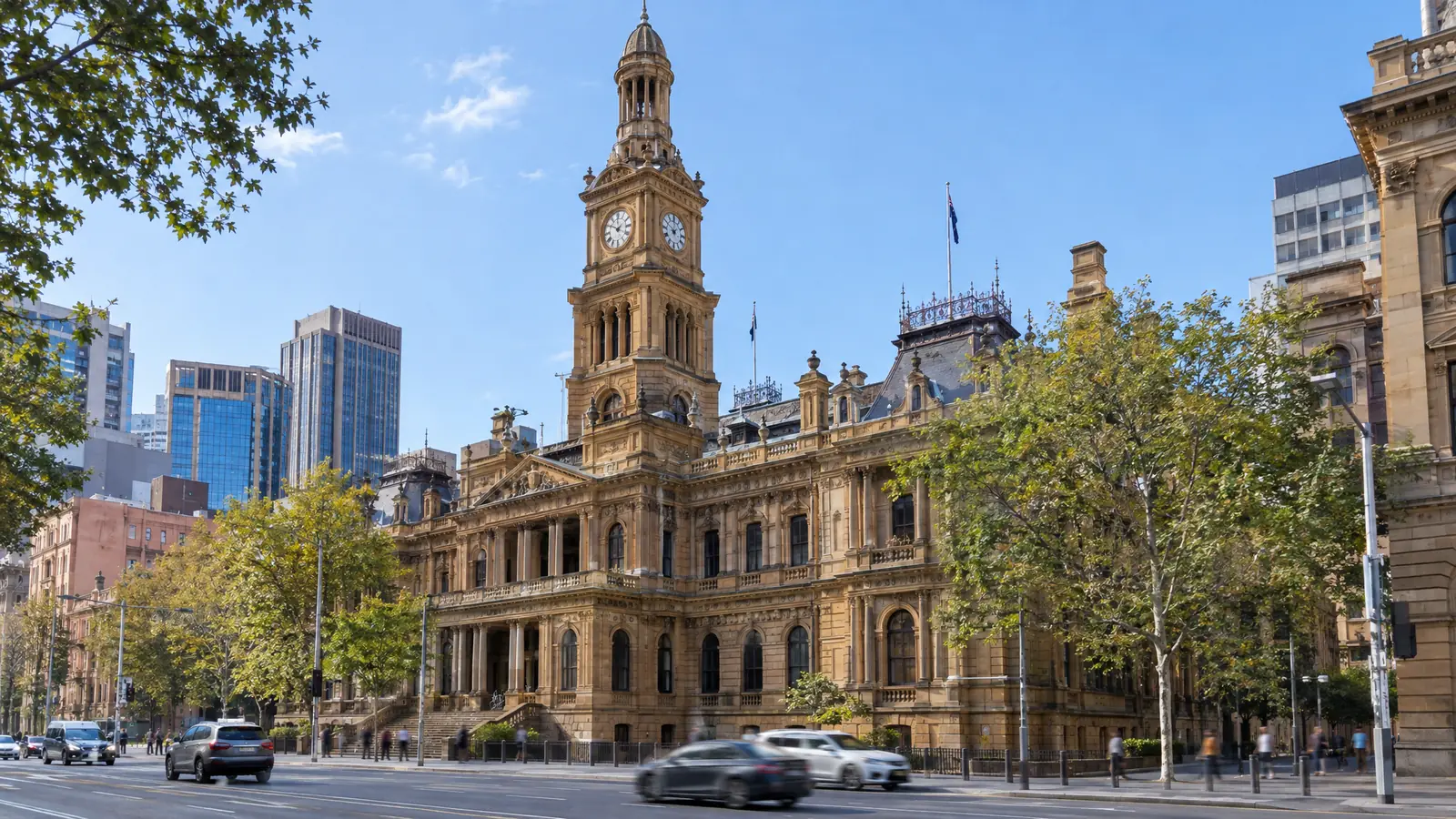
The prosecutions from the 9 February Town Hall rally have taken an unusual turn. Defence lawyers for the protesters have served subpoenas on Premier Chris Minns, Police Minister Yasmin Catley, Tourism Minister Steve Kamper and others.
This is a strange turn of events as it is rare for a Local Court criminal matter to reach the Premier’s office. Here is what has happened, how subpoenas work, and what the protesters are charged with.
What has happened so far
The rally was held outside Sydney Town Hall during the visit of Israeli President Isaac Herzog. As a result of the demonstration, more than a dozen protestors now face charges, including assaulting police, in the Local Court. However, since then, police have reportedly already withdrawn 10 of the original 30 prosecutions.
The subpoenas were also served on Police Commissioner Mal Lanyon, Assistant Commissioner Paul Dunstan and the chiefs of staff of the Premier and the Police Minister. Mr Kamper is included because he made the Major Events Declaration for the protest.
The defence wants evidence about how the police operation was planned. It argues the government interfered in operational decisions that belong to police.
According to the ABC, Local Court Judge Scott Nash has already found that correspondence between senior police and parliamentarians is relevant. As a result, he dismissed the Police Commissioner’s attempt to stop its release. The officials are due to give evidence on 8 March, unless they successfully apply to have the subpoenas set aside. And a trial of at least 16 protesters is expected in July 2027.
Separately, the Law Enforcement Conduct Commission began examining police conduct at the rally on 19 October.
How a subpoena works, and what “relevance” means
A subpoena is a court order to produce documents or attend court to give evidence. Either side in a criminal case can ask for one.
The person who receives it can apply to have it set aside, usually because it is not relevant or is oppressive. The court then asks whether the material could realistically help the defence on an issue in the case. Lawyers call this a legitimate forensic purpose. A request that amounts to a fishing expedition fails.
That is why relevance is the battleground here. The defence has said it will argue the police operation was unlawful, an argument the court has not yet decided. In this case the ministers have not yet been ordered to attend.
What the protesters are charged with
The reported charges include assault, resisting arrest and throwing a missile at police. Charges that depended on the post-Bondi protest restriction scheme are in a different position. The Court of Appeal found that scheme unconstitutional on 16 April, and police have withdrawn some charges that relied on it. The Major Events Declaration is a separate instrument and was not struck down.
For offences like assaulting or resisting police, the prosecution must prove each element beyond reasonable doubt. Often one of those elements is that the officer was acting lawfully in the execution of their duty. That is where the defence argument about how the operation was planned and run comes in.
Our work defending protesters in NSW
Protest cases are a big part of our work at the firm.
Our criminal solicitors have acted in Commissioner of Police v Josh Lees and for Hannah Thomas in her civil claim over her arrest at a pro-Palestine protest. In February, our firm also set out the legal support available to people arrested or assaulted at Sydney protests.
A subpoena to a Premier is not a finding about anything. It is the defence testing, in open court, what the evidence shows.
Charged at a Sydney protest?
If you are charged after a protest, the rules about police powers, directions and lawful arrest decide how your case runs. Keep any footage you have and write down what you saw as soon as you can. Do not talk to police about the charge without advice first.
How O’Brien Criminal & Civil Solicitors Can Help
If you have been charged after a protest, our criminal defence team, led by Peter O’Brien, an Accredited Specialist in Criminal Law, can explain your options and what the court will look at.
Request initial advice (no-obligation) via the form below or call us on (02) 9261 4281.
This content is for general information purposes only and does not constitute legal advice. You should seek independent legal advice relevant to your specific circumstances.

Peter O'Brien is the Principal Solicitor of O'Brien Criminal & Civil Solicitors and Australia's leading expert in intentional torts litigation, with over 25 years of experience securing landmark victories in malicious prosecution and unlawful imprisonment cases. Author of Intentional Tort Litigation in Australia and recipient of the Law Council of Australia President's Medal, Peter has achieved record-breaking compensation for clients and is widely recognised for his unwavering commitment to access to justice.