
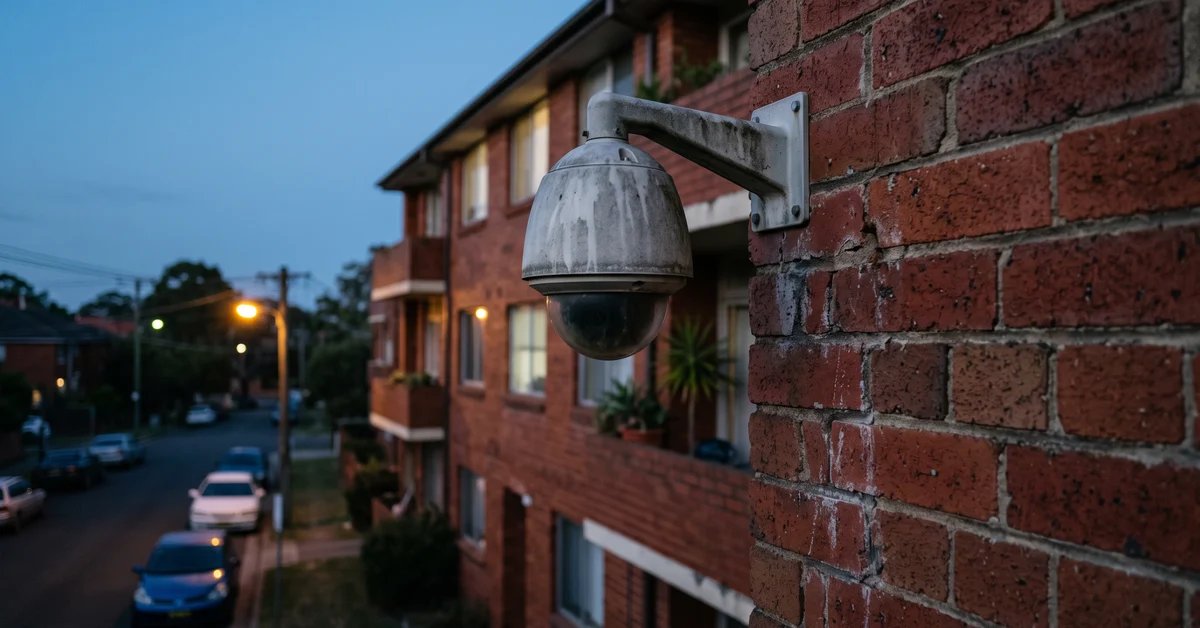
CCTV Identification Issues Lead to Dismissal of criminal AVO charges at Downing Centre Local Court
Our client, Andy* was charged with breaching an Apprehended Violence Order (AVO) following a neighbour’s complaint about a brief scuffle. The protected person did not make any complaint to police. After the matter was listed for a defended hearing and key weaknesses in the prosecution case were exposed. Our Sydney criminal lawyers had all charges withdrawn and dismissed.
Case Summary Of AVO Charges
Andy was charged with contravening an Apprehended Violence Order involving his partner. The allegation did not originate from the protected person (known as the PINOP: Person In Need of Protection), but from a neighbour who reported seeing what was described as a brief altercation between two unknown individuals. Police reviewed nearby CCTV footage and concluded the individuals shown were Andy and the PINOP.
After a detailed review of the evidence and strong submissions at the defended hearing by our criminal lawyers, the prosecution withdrew the charge. The matter was dismissed with no conviction recorded for our client.
Read our successful criminal case studies.
Detailed Overview Of AVO Charges
A charge of contravening an AVO is a criminal offence in NSW. The prosecution must prove beyond reasonable doubt that:
- A valid AVO was in place,
- The accused was aware of the order, and
- The accused engaged in conduct that breached its conditions.
From the outset, this case presented significant evidentiary problems.
No Complaint From The Protected Person
Importantly, the protected person did not make any complaint to police.
There was:
- No statement alleging a breach
- No confirmation of the identity of the persons depicted in the CCTV
- No direct evidence from the PINOP supporting the allegation
This absence of evidence raised immediate concerns about whether a breach could be properly established.
Identification Concerns
Police relied heavily on CCTV still images, asserting that the individuals captured were Andy and the PINOP.
However:
- The neighbour’s physical description did not clearly match the CCTV footage
- The footage quality did not clearly establish identity
- The alleged conduct visible on the footage did not clearly amount to a breach of the AVO
Identification evidence based solely on CCTV images can be unreliable, particularly where there is no supporting witness evidence confirming who is depicted.
No Clear Evidence of a Breach of AVO
Even if identification could be established, the footage itself did not clearly demonstrate conduct that would amount to a contravention of the order.
These issues raised substantial doubt as to whether the prosecution could prove the charge beyond reasonable doubt.
The Defended Hearing For AVO charges
The matter was listed for a defended hearing at the Downing Centre Local Court.
Following short opening submissions, the defence outlined the critical evidentiary weaknesses, including:
- The absence of any complaint or statement from the PINOP
- The inconsistencies in descriptions
- The frailties in the CCTV identification evidence
- The lack of clear proof of any prohibited conduct
After these matters were articulated, the prosecution requested that the matter be stood in the list. Shortly thereafter, the charge was formally withdrawn.
Outcome
- Contravene AVO charge withdrawn
- Proceedings dismissed
- No conviction recorded
- No findings of guilt
This was a highly favourable outcome. The matter was resolved without the need for a contested hearing to continue, and the client avoided the serious consequences of a criminal conviction for breaching an AVO.
Charged with Breaching an AVO? Sydney Criminal Lawyers for AVO charges
Allegations of breaching an Apprehended Violence Order are treated seriously by the courts. However, police must still prove every element of the offence beyond reasonable doubt.
If you are facing an AVO breach charge, early legal advice is critical. O’Brien Criminal and Civil Solicitors have a proven track record in successfully defending clients for AVO charges.
 Call (02) 9261 4281
 Email
Email
 Or enquire online for a confidential consultation.
*We always change details in our case studies to protect client confidentiality.